I used to think that if you want to make a big difference, you have to be in a big city.
I’m from a lot of places. Born in California. Lived in Colorado, Nebraska, Kansas City for a bit. My dad was a pastor most of my life and we moved around a lot.
When I was twelve, we were in Kansas City, and my parents felt like God was asking them to move to St. Louis to help start the first location of Jubilee Church. I’d never even been to St. Louis. I remember on the drive my little brother looked up and asked, “Dad, do you have any skills? What are you going to do for work?”
My dad just chuckled. “If God wants us to move,” he said, “He’s going to provide for us.”
That was it. That was the answer.
You say yes, and then you figure out the details later. You don’t get to say, “Once you assure me, Lord, then it will be a yes.” It’s just yes. Then you find out what that means.
By 2010 I’d been married for four years. We had one child and another on the way. I was working tech at a big insurance company. Cubicles and numbers. Lots of cubicles. I was serving at the church too, leading worship, helping with a small group, whatever was needed. I wanted to say yes to God the way my dad always had.
But I was starting to feel dissatisfied at my job. I felt like there’s got to be more than this.
One day I was out on a walk, praying, and out of nowhere I felt like God said, quit your job so you can be more mobile. I called my wife. I told her, this is going to sound crazy, but I think God is telling me to quit my job. I was expecting her to say, let’s pray about it, let’s get some counsel. Instead she was quiet for a minute, and then she said, well, if God told you to do it, you better just do it.
I turned in my resignation. They ended up asking to hire me a couple days a week as a consultant, so I started my own tech consulting business. As long as I had internet, I could do it from anywhere.
God, what do you have for us?
At that point I loved big cities. I didn’t think much of small towns, honestly. We were even looking at New York City, at planting a church in Brooklyn. It felt like it would be a great fit.
Then on Good Friday of 2013, a pastor from a sister church at the Lake of the Ozarks passed away from cancer. I was getting breakfast with Bryan, who leads all the Jubilee locations. The people at the Lake wanted to join up as a location of Jubilee. He asked if my family would move down to help relaunch it. Give me two years, he said. If it’s not a good fit, you can come back. No questions.
I told my wife. She said, Let’s do it. This is what God’s been getting us ready for.
Two years, I thought. That’s not really all that long. How hard can it be?
We moved in June of 2013. Fourth of July weekend was our second weekend here, and the Lake was chaos. People kept telling us to wait, it calms down in the winter.
Two years came and went. People kept asking if we were staying or going. God hadn’t pushed us to go anywhere else, so we stayed. Around the third year, it got hard. I guess the honeymoon wore off. Some people left. It was a tough season.
I remember sitting with Bryan and he asked me a question. Do you care that people in your town are going to hell?
I knew the right answer was yes. But I wanted to actually think about it first.
Someone had told me once, if you want to know what you really care about, look at your calendar and look at your money. So I looked. Most of the people I spent time with were already Christians. People from church, friends I already had. And other than our tithe, our money mostly went to us. Our family.
My wife and I came to a place where we felt convicted. God’s word says He loves lost people. Jesus leaves the ninety-nine for the one. Based on our calendar and our budget, we didn’t truly have that heart for this community. Not yet.
That year there was a lot of prayer. A lot of repentance. We asked God to give us a heart for this place.
Some of it was pride, if I’m honest. I liked cities because I thought that’s where you had to be to make a difference. If you want to make a big difference, you have to be in a big city.
I’m a relational person by nature. In a small town you see people you know at the grocery store. There’s connection everywhere. And somewhere in that year, with all the praying and the deepening relationships, we fell in love with this place.
In 2017 we bought a house. We put down real roots. We weren’t going back.
We have four kids of our own now. Two more came into our home through foster care.
We’d talked about fostering for years. It was always in the back of our minds. But it was never at the front. Maybe when the kids are older. The training looked daunting, ten Saturdays in a row, and we had a seven-year-old who couldn’t be left home alone yet.
Then a situation came up and there were children who needed a home. We said yes. It’s not what we imagined when we first thought about maybe doing this one day, but it’s how God brought it to us.
Their parents are doing well, working the program. Reunification is the goal. That’s what we’re rooting for.
Going into it, we were open to welcoming them into our home for however long they needed. God puts them with us for however long He puts them with us.
Every night I read them a Bible story before bed. That’s become one of my favorite parts of the day.
Six kids means a lot of laundry, a lot of cooking, a lot of who’s got the car today. My wife’s done an amazing job teaching them to help carry it. Our eleven-year-old can cook several meals on his own now. The older ones do their own laundry. The oldest can drive, which changed everything. Someone else can run to the grocery store.
It’s a lot. But it’s not something we’re carrying by ourselves.
We only see what we can see. God sees something so much bigger. Every time I’ve stepped out not knowing how something was going to work, He’s shown me. Don’t worry, He says. It’s okay.
I just want to say yes and trust God’s plan.
When we launched this location at the Lake, we had four kids total in the room on a Sunday. Two of them were mine.
Now we average around forty kids on a Sunday. A third of them are foster, adopted, or kinship.
Someone pointed out to me not long ago how huge that percentage is, and I remember thinking, oh my goodness, yeah, that’s mind blowing. I hadn’t realized it. It wasn’t something we set out to do on purpose. We didn’t run classes about it. We just started a fund a few years back, part of a bigger building campaign, and set aside some money for adoption and foster families. People’s hearts rose to it in a way that surprised us. We thought, this is good, it’s in the Bible. Widows and orphans. But the way people responded, we knew God was doing something different here.
Once a year we set aside a Sunday to celebrate foster and adoption. Our small groups rally around families that are fostering. Not everyone can bring a child into their home, and we try to make sure people know that’s not the only way to help. You can make a meal once a month for a family that’s fostering. You can babysit and give the parents a date night. There are a hundred small ways to be part of it together.
A friend of mine pastors a bigger church in Kansas City. He came out of Jubilee originally. He’s in the process of starting a nonprofit focused on churches across Missouri, trying to get other congregations to do what we’ve stumbled into here.
It’s not complicated. You talk about it. You put some money behind it. People’s generosity follows vision. When a church’s heart is set on something, God moves people toward it together.
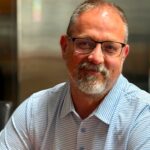
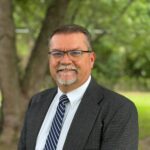
Seth Hein
Foster parent
Pastor at Jubilee Church the Lake

Here's how this story is reaching our community.
Voices of Hope
Every person in this community carries a story worth telling. Voices of Hope features the real people of the Missouri Ozarks who show up for children and families, foster parents, caseworkers, volunteers, survivors, and neighbors who simply refused to look away.
Read more Voices of Hope stories →