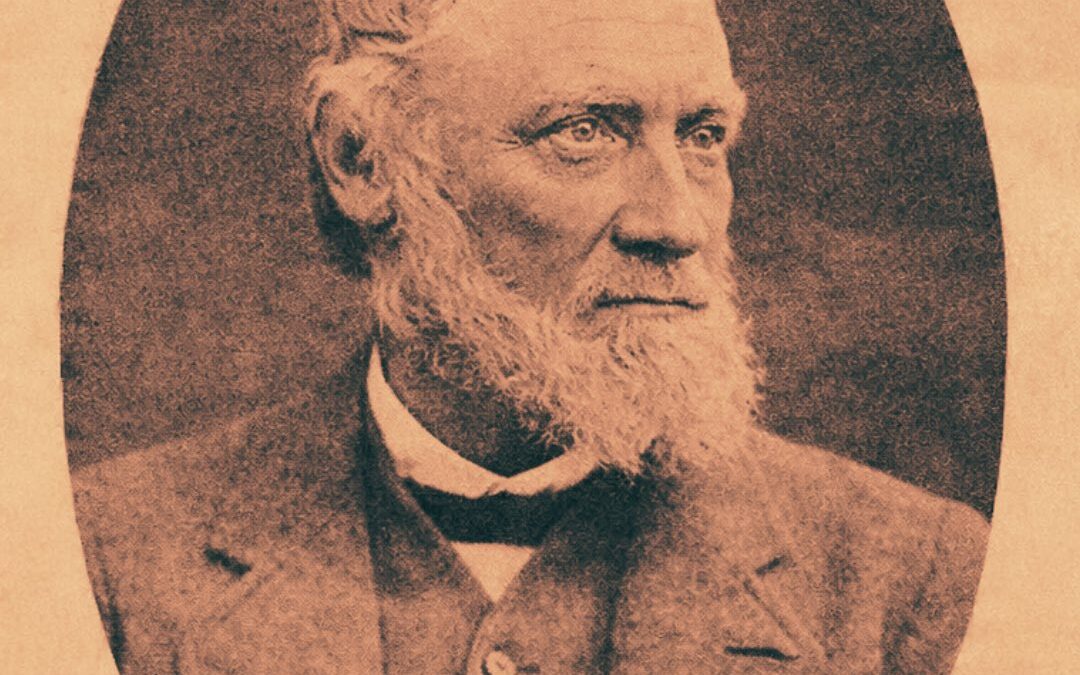
Few people in the Ozarks know his name. But he helped build this nation.
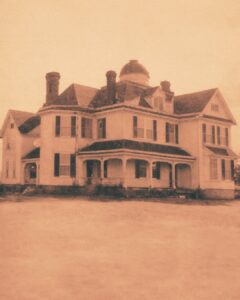
Jacob Blickensderfer came to the Ozarks to retire. He planted an orchard, built a mansion with an astronomical dome, and put down roots the way a man does when he intends to stay.
But before the orchard. Before the mansion. Before any of it.
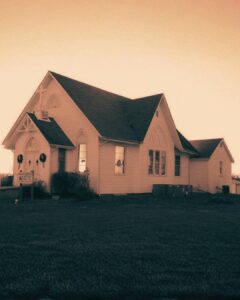
He built a church.
On Valentine’s Day 1861, Jacob boarded a train in Ohio to meet with Abraham Lincoln, describing the President as “sad but with kind eyes,” to discuss building a railroad that would unite a nation on the edge of war.
At Promontory Point on May 10, 1869, the Golden Spike was driven and whistles shrilled in every city across the country. Jacob was there. For forty years, chief engineer on the railroad that connected this nation coast to coast.
In 1873, he walked down Pennsylvania Avenue in the snow, past iron fences and into the brilliantly lit White House, where enormous silver urns held yellow roses, to report to President Grant.
Then he came here.
His son Martin had come first, a Civil War veteran who received a land grant and built a home near Cobb’s Creek, eight miles east of Lebanon. Jacob followed. They planted themselves in the Ozarks and built something meant to last.
When his youngest son Andrew was killed in a hunting accident in 1886, his body was brought back by train. His brothers kept watch over him through the night in the little church. He was buried the next day in the cemetery beside it, the first grave there.
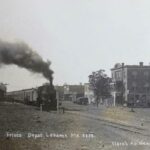
When his wife Maria Louise died suddenly in Omaha in 1888, just hours before they were to board the train for their permanent home at the Oakland Mansion, her belongings had already been shipped ahead. Eight teams and wagons carried her furniture from the Frisco depot through these hills, her piano delivered in a wagon by itself.
Jacob buried Maria beside their son.
He lived alone in that big house until he died in 1899. Buried next to Maria, in the little cemetery beside the church on the hill.
In his diary, he wrote that railroading was an integral part of American life. The mansion was a folly. The little church would be his only lasting memory.
The family he planted in the Ozarks took root across generations. The railroad he built connected a nation. The church he built never stopped being a church, passing from the Moravians to the Methodists, and on again, never closing, never stopping.
Jacob’s great-grandson Jack grew up in Lebanon, in the shadow of everything his family had built here. At 19, he enlisted in the Army Air Corps. On July 7, 1944, his plane went down over the Netherlands. Jack was 20 years old. His body was returned to the Ozarks.
Three generations after Jacob stood on a hill and imagined what this land could become, his family was still giving everything.
Today, Oakland Community Church is still on that hill. Every month, without fail, they give to the children of the Ozarks through Live 2 Give Hope.
142 years of giving. And counting.
Jacob Blickensderfer’s legacy lives on.
~~~~
Historical sources: Joan Rowden Hart, pastor of Oakland Heritage Church of God 1999–2010; Jacob Blickensderfer family diaries, Old Trails and Iron Rails.
Photos: Oakland Community Church courtesy of Joan Hart and Barbara Darst. Jacob Blickensderfer portrait and Oakland Mansion courtesy of Barbara Darst. Historical photos enhanced for clarity using AI tools.

This is the Ozarks
Every place carries a story. This is the Ozarks about the history, character, and landscape of the Missouri Ozarks — the towns, the roads, and the people that shaped who we are and why it still matters.
Read more Ozarks stories →