Nobody mourns a highway. Except this one.
One hundred years ago, Route 66 was stitched together from dirt paths and farm roads by the communities it would connect. Town by town. Mile by mile. Designed to run through the front door of every place it touched. Not around them. Through them.
Lebanon fought to be part of it. In 1922, the town sent 127 people and the Yellowjacket marching band to the state capital to make their case.
Construction began in 1926.
Diners opened. Service stations. Small hotels. Places where the locals came every morning and strangers walked in from places nobody in that town would ever see. Where a trucker from California and a farmer from two miles down the road sat at the same counter and drank the same coffee. Where you could be from anywhere and feel, for an hour, like you were from here.
Then a war changed what roads were meant to do. In 1956, the Federal Highway Act laid out a new system. Laclede County signed the first interstate contract in the nation. In August 1957, the bypass opened.
The new road was wider. Faster. Safer. It just didn’t stop anywhere.
The name Route 66 was removed from the map in 1985. Most of the service stations and motels gone with it. Two generations have lived here without ever knowing the diners or sitting at the counters. Only knowing the highway existed because someone older said it used to mean something.
And yet people still get off the interstate and go looking for it. They fly across the world to drive what’s left.
They’re looking for something they can’t quite name. Most of them never lived it. But somewhere between the faster and the better and the wider, something got left behind.
People are still pulling off the highway trying to find it.
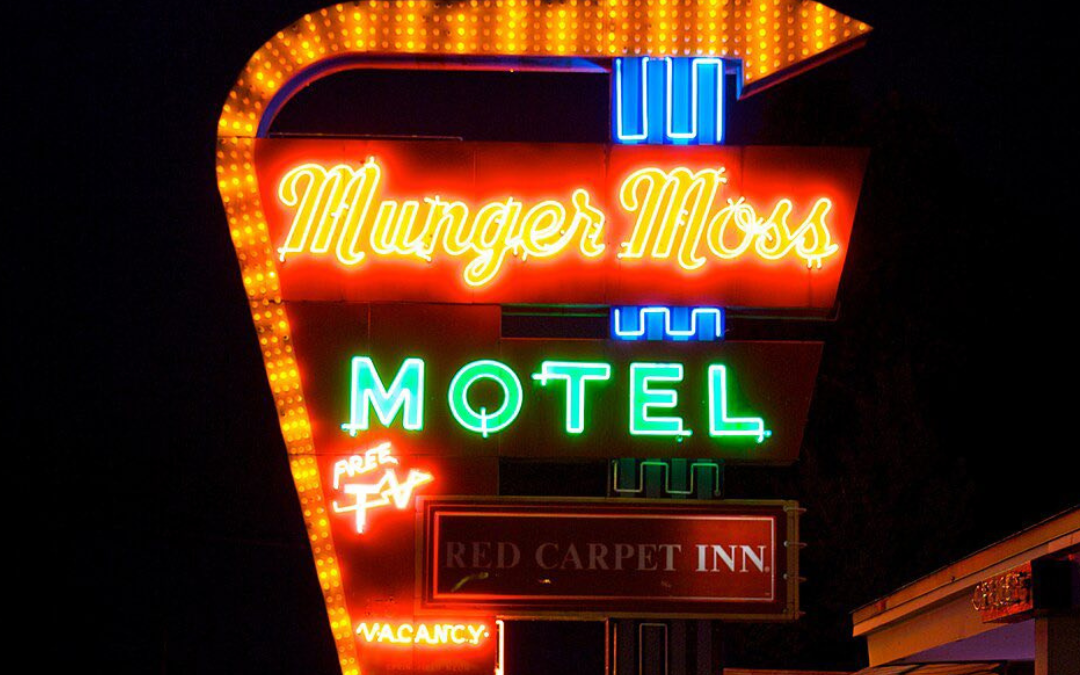
The Munger Moss Motel in Lebanon, Missouri, chosen to represent the Show Me State on a United States postage stamp this May as part of the Route 66 Centennial series. Still standing on Route 66 in Lebanon. A roadside stop that never really stopped being one. Photo: Marcin Wichary (Flickr, CC BY 2.0)
Harris Cafe in Conway, 1950. This is what Route 66 looked like when people didn’t just pass through, they stayed awhile. Source: Laclede County Record via Lebanon-Laclede County Route 66 Society. (lebanonroute66.com)
Old Route 66 at Jefferson and the Union Bus Depot, 1958. The year after the interstate opened, and everything started to change. Photo: Kerry K. Hilton via Lebanon-Laclede County Route 66 Society. (lebanonroute66.com)
-
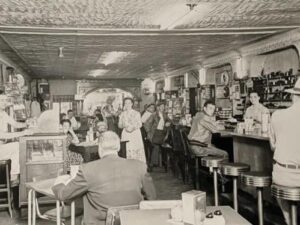
- Harris Cafe in Conway, 1950. This is what Route 66 looked like when people didn’t just pass through, they stayed awhile. Source: Laclede County Record via Lebanon-Laclede County Route 66 Society. (lebanonroute66.com)
-
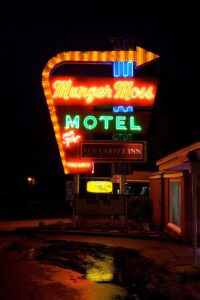
- The Munger Moss Motel in Lebanon, Missouri, chosen to represent the Show Me State on a United States postage stamp this May as part of the Route 66 Centennial series. Still standing on Route 66 in Lebanon. A roadside stop that never really stopped being one. Photo: Marcin Wichary (Flickr, CC BY 2.0)
-
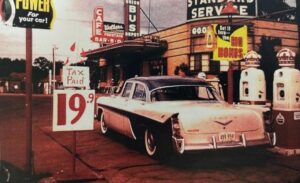
- Old Route 66 at Jefferson and the Union Bus Depot, 1958. The year after the interstate opened, and everything started to change. Photo: Kerry K. Hilton via Lebanon-Laclede County Route 66 Society. (lebanonroute66.com)
——
Photo credits: Marcin Wichary (Flickr, CC BY 2.0); The Laclede County Record; Kerry K. Hilton; Lebanon-Laclede County Route 66 Society (lebanonroute66.com)

This is the Ozarks
Every place carries a story. This is the Ozarks about the history, character, and landscape of the Missouri Ozarks — the towns, the roads, and the people that shaped who we are and why it still matters.
Read more Ozarks stories →