Before God could use my heart, He had to heal my heart.
I grew up in this area, going to school in Conway and then Joel E. Barber before graduating from Lebanon High School. After that, I attended Missouri State University where I earned my bachelor’s followed by my MBA.
From the outside, my life looked like it was headed somewhere important.
With my degrees, I moved to Arizona and worked in marketing, determined to climb the corporate ladder. I chased after all the things I thought were important, but I was utterly miserable. Nothing was ever enough.
Titles. Money. Validation.
I always needed just a little bit more. The finish line kept moving, and it wasn’t until years later that I recognized the broken cycle for what it was. Our worth was never meant to be measured that way.
From eighteen to thirty, I moved, on average, every six months. I lived in Phoenix. I lived in DC. I traveled to thirty-three different countries.
What I didn’t realize at the time was that I was running.
As a child, I had been sexually abused. In high school, I lost my virginity to being raped. In my mind, Lebanon represented everything that was wrong in my life. I thought if I could just leave, just move, just succeed, I would outrun it.
But you can’t outrun trauma.
In the middle of all that running, I went on an eleven-month mission trip called the World Race. Eleven countries in eleven months. I remember sitting in India on a concrete floor listening to people talk about their education or plans and what they were going to do when they got home. I remember thinking, “I have a master’s degree. I deserve the title, the salary, and the recognition to prove that it was worth it. That I am worth it.”
And I very clearly heard the Lord respond, “Would you rather waste your degree or waste your life?”
That question undid me.
I knew then that God had something different in mind for me. He was going to take me places I never expected. But before God could use my heart, He had to heal my heart. I had to sit in it. I had to deal with it. I had to let Him untangle what had been done to me so I would not carry that into a child’s story.
You cannot heal trauma from a place of brokenness.
When I finally returned home to Lebanon, something had shifted. I wanted to be here. I wanted to put down roots. I was no longer concerned with salary and status. The healing was not instant, but it was real. And in that healing, God began to plant something new. Foster Care.
Years earlier in Arizona, I had helped raise a little girl with cerebral palsy. She had called me mom. I had been her mom, for all intents and purposes. Walking away from my relationship with her dad in obedience to the Lord absolutely broke my heart, but I will never regret loving her.
I can see, now, how that season prepared my heart for the ones to follow. In foster care, we do not always get to know the story of kids who are no longer in our care. We just have to find peace, knowing we loved them the best we could for the time we were given.
When I finally got licensed to provide respite care, I thought I’d be easing into foster care. I had been assured that I wouldn’t receive any late-night calls, as respite is typically set up weeks in advance.
My first call came in at nine o’clock at night.
It was for a three-month-old baby girl who had just been removed from her parents. They handed her to me while she screamed, inconsolable. They weren’t sure when she had eaten last. All she had was a diaper bag full of socks.
I had no biological children and had no clue what I was doing, so I called my sister. She stayed with the baby while I ran to Walmart and bought everything I could think of just to make it through the night. I half-slept on the couch while holding the baby, because every time I tried to lay her down, she startled awake. Aside from screaming, she had no emotion.
But the next day she started cooing and smiling.
Then the caseworker called to let me know they’d found family placement.
Eighteen hours. That was all the time I had with her.
I remember thinking, “I don’t know if I can afford to say ‘yes’ if it’s going to cost me a hundred dollars a day.” Then I had the idea to turn my spare bedroom into a giant closet so I could keep every size diaper and clothing on hand so no one would have to run to Walmart at nine o’clock at night alone.
Not long after, I went to visit a friend in Tennessee who had recently started fostering. She showed me their local Community Closet, and I thought, “Oh yes. THIS is what we are going to do.”
Not because it was my idea, but because it worked. Because it removed a barrier. Because foster parents shouldn’t have to say no just because they don’t have diapers.
We carved out space in the back of our family storefront and called it the Fostering Hope Closet. Within six months it took over half the store, and eventually it needed a building of its own. In 2021, when we were awarded a grant to expand, I closed my business and stepped into this ministry full time.
Sometimes I get paid. Sometimes I don’t. There’s still a voice that whispers, “You have a master’s degree. You could be making more money somewhere else and never have to wonder if you’ll get paid.”
And I could.
But I wouldn’t be living out the calling God placed on my heart. I would be serving myself, not Him and not others.
Later, I said yes to five days of respite for a fifteen-year-old, which actually turned into nine months. Nine months of teaching her how to drive. Teaching her how to cook. Talking about boys. Crying in the middle of the night.
I didn’t carry her in my womb, but I sure carried her in my heart.
She turned sixteen, and the case goal shifted. People do not adopt sixteen-year-olds. But I asked her if she wanted to be adopted.
She did. She wanted a family. She wanted to belong. She chose us just as much as we chose her.
The adoption was finalized one month before she turned 18. Suddenly, in the blink of an eye, she was an adult. She wanted to go out and strengthen her wings. She needed to find her healing.
Just like I did.
Today she is growing her own roots in Lebanon. She’s raising three beautiful children, determined not to allow her story to become their own.
Adoption does not erase trauma. It does not make everything easy. No matter which way it goes. Healing is hard, but it is worth it.
The number one reason people tell me they can’t foster is that they couldn’t bear to get attached and then give the child back.
I understand that fear.
When I brought that to the Lord myself, He reminded me I couldn’t have been more attached to that little girl in Arizona than I was. And I survived losing her.
What I had to realize is fostering is not about building your own family.
It’s about giving yourself, and your family, to a child for however long they need. Whether that’s a day, months, or even years.
They are not yours.
You must live on a razor’s edge of surrender.
About fifty percent of children in foster care reunify. That means you must hold both “forever” and “just for today” in the same open hands. Your goal can’t simply be permanence, it must be expansion.
Expand your family to include the kids who are hurting.
Expand your family to include their parents.
Expand your family to include their siblings.
Expand your family to include a story that did not start with you.
The reason many families end up in crisis is because they don’t have support. It is cyclical. It is generational. Instead of labeling them and writing them off, we should be rallying around them and lifting them up.
This is Holy work.
How many times in Scripture does God talk about bringing us into His family? About caring for children? About adopting us? These are His kids before they are anybody else’s.
And I believe this is a calling we ALL have.
Not all of us are meant to be foster parents, but all of us are called to step into someone’s story. To support. To rally. To expand the circle.
It was never meant to be one family doing it alone. Resources are important, but relationships matter more. Families tell us all the time that yes, tangible support helps, but what they need even more is someone to truly see them. Someone to listen. Someone to cry or pray with them. Someone who will answer the phone at eight o’clock on a Sunday night, because foster care isn’t Monday through Friday, eight to five.
It is crisis after crisis. And it is blessing after blessing.
This was always meant to be done in community.
And I’m so glad we get to step into that.
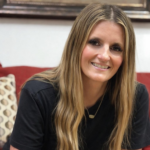
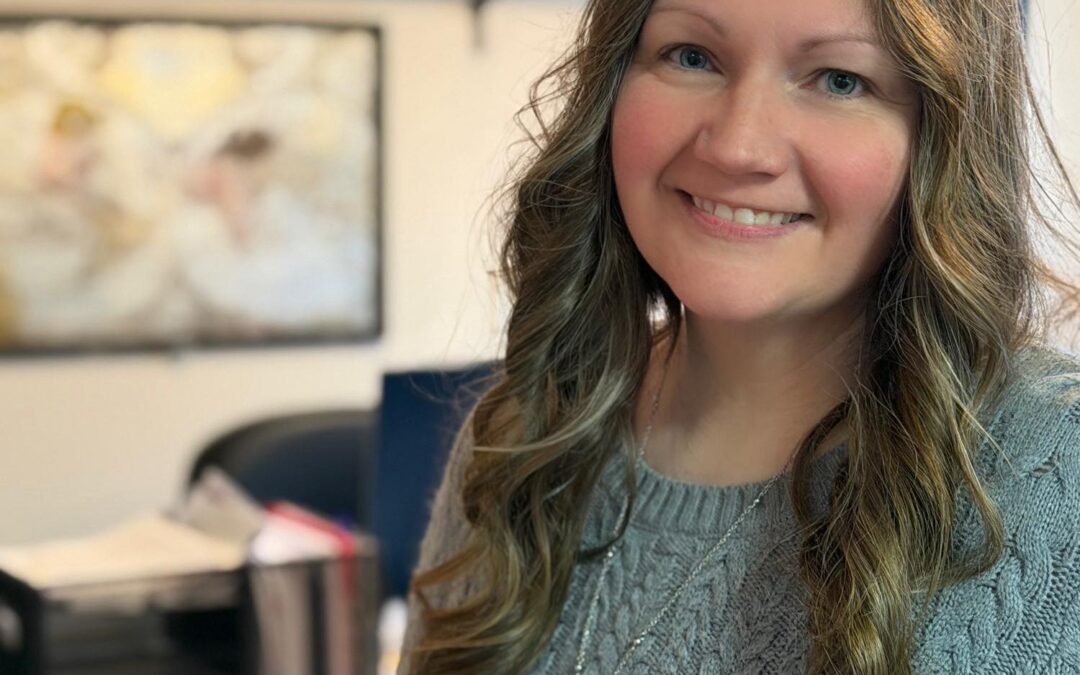
Laura Angst Gartin
Former foster parent, adoptive parent, and Program Director for Live 2 Give Hope
Voices of Hope
Every person in this community carries a story worth telling. Voices of Hope features the real people of the Missouri Ozarks who show up for children and families — foster parents, caseworkers, volunteers, survivors, and neighbors who simply refused to look away.
Read more Voices of Hope stories →